Broke out of a five-year practice rut
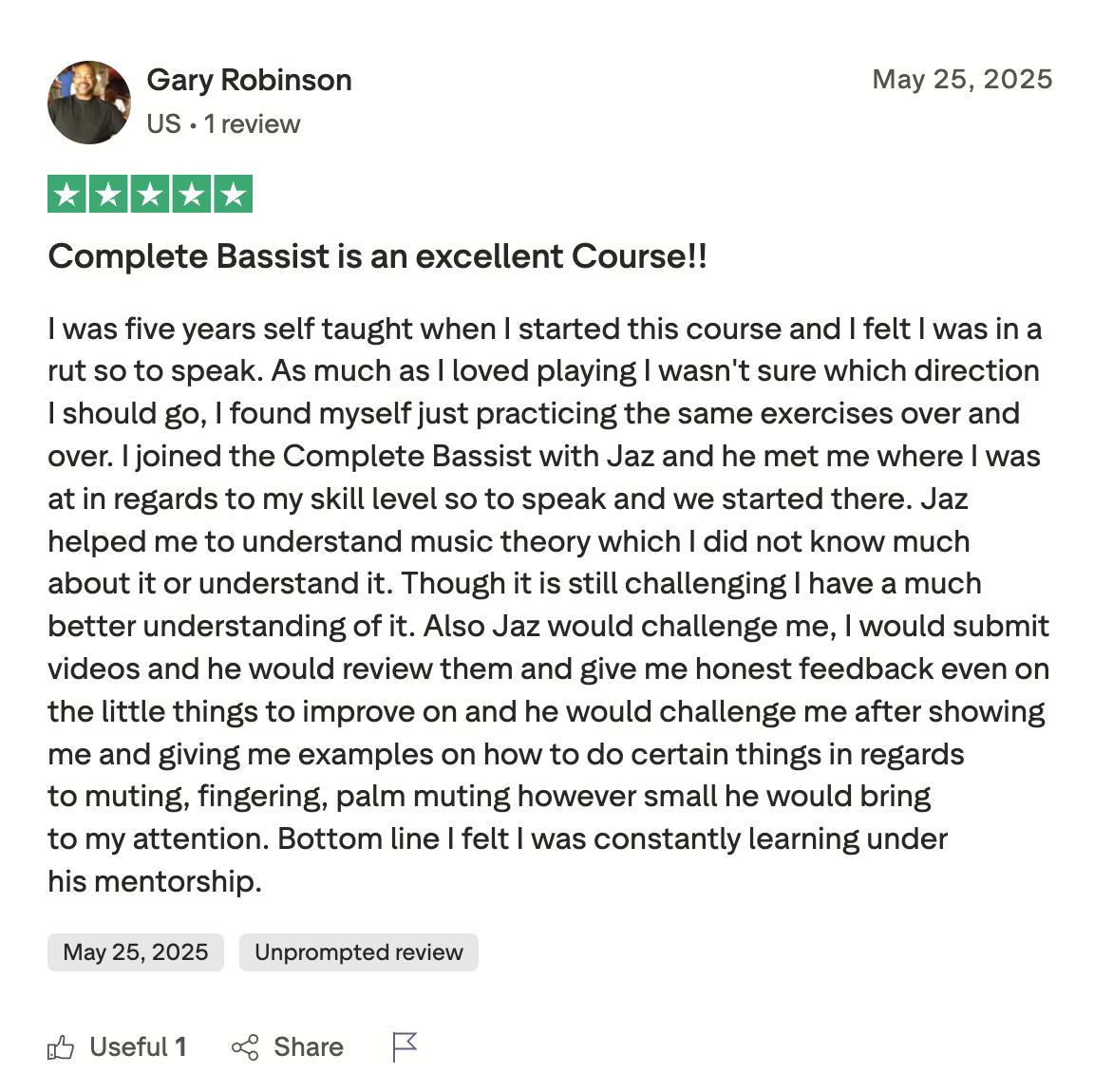
After five years of teaching himself, Gary felt stuck repeating the same exercises. Personalised feedback and a clear practice plan helped him understand the music he was playing and move forward with purpose.
Walk into any musical situation and confidently hold your own as a complete bassist.





I'll look at your playing, your goals and what's holding you back, so you know what to focus on next. You'll get a feel for what it's like to study with me, and we'll see whether we're a good fit to work together.
If we're a good fit, you'll study with me one-to-one for 3 months. We'll follow a personalised plan with structured assignments, custom-built practice tools and regular one-to-one feedback and support, so you know what to practise, how to approach it and what to adjust as you improve.
Walk into any musical situation and confidently hold your own as a complete bassist. Create bass lines that groove, understand why the notes work and move freely across the fretboard so you can bring your own ideas to the music and respond to the musicians around you in the moment.
See what happened when these players stopped collecting information and started connecting everything together.
After five years of teaching himself, Gary felt stuck repeating the same exercises. Personalised feedback and a clear practice plan helped him understand the music he was playing and move forward with purpose.

Michael already had years of playing experience but lacked direction. A structured plan helped him connect the different areas of musicianship, focus his practice and feel more confident accepting gigs.
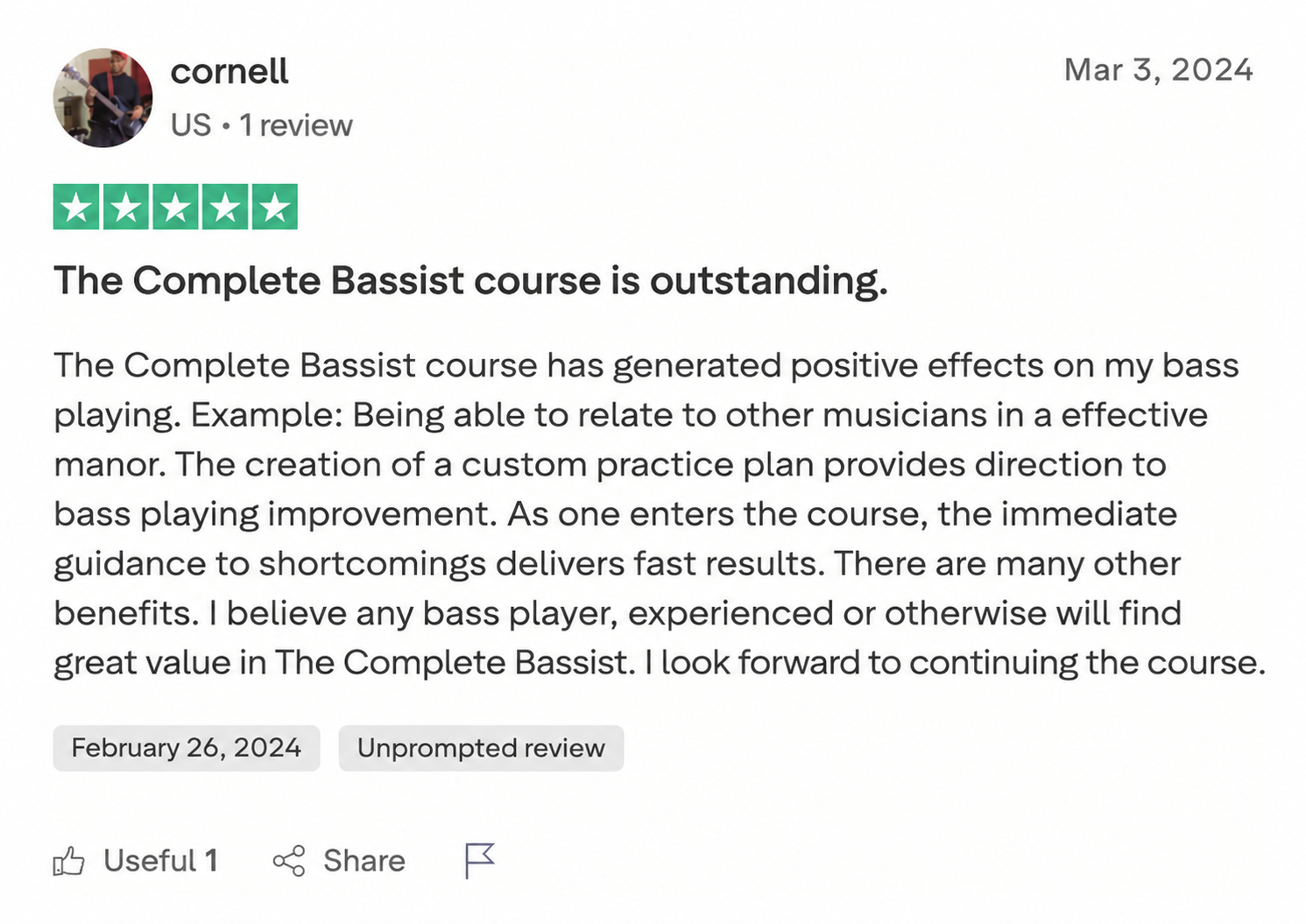
Cornell used to spend at least two weeks learning eight songs. Working together helped him understand the music more clearly and learn the same number of songs in just two days.
Elizabeth progressed from learning the basics to successfully auditioning and performing with an artist in Los Angeles. She now analyses chord progressions, creates her own bass lines and regularly plays with other musicians.
Adam knew plenty of theory but struggled to use it on the bass. Personalised feedback and practical application helped him begin closing the gap between what he understood and what he could play, with a clearer idea of what to practise next.
Curtis was a self-taught bassist who’d picked up a few bad habits. In two months, we refined his technique so he could play bass lines more cleanly and with greater control.

David could already play by ear but kept returning to the same familiar areas of the neck. I helped him connect notes and positions across the fretboard so he could move beyond those patterns. He reported that the whole fingerboard had opened up, supporting his ambition to pursue session and teaching work.

I helped Douglas understand how jazz harmony works and how it connects to walking bass lines, giving him a clearer understanding of the notes and chord changes.

Edward returned to bass after a 30-year break and needed to rebuild his technique. Focused feedback helped his right-hand playing progress further than he expected, giving him the foundation to begin working on slap bass.
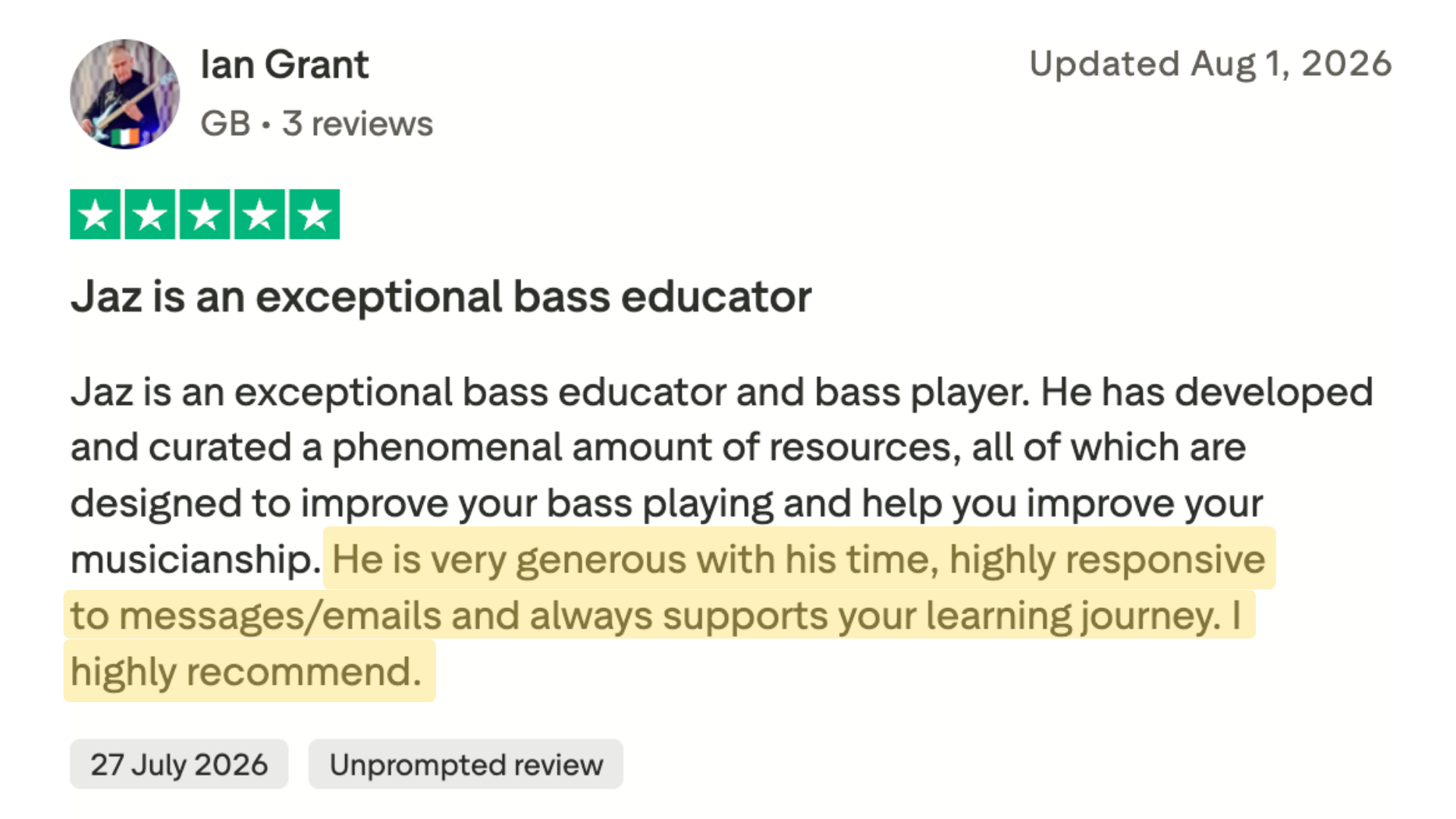
Ian started as a beginner. Working together helped him build the skills and confidence to audition for a local band and get the gig.
Jake started as a beginner. Over eight months, we built his technique and understanding of music theory, giving him the skills to start playing with a local band.
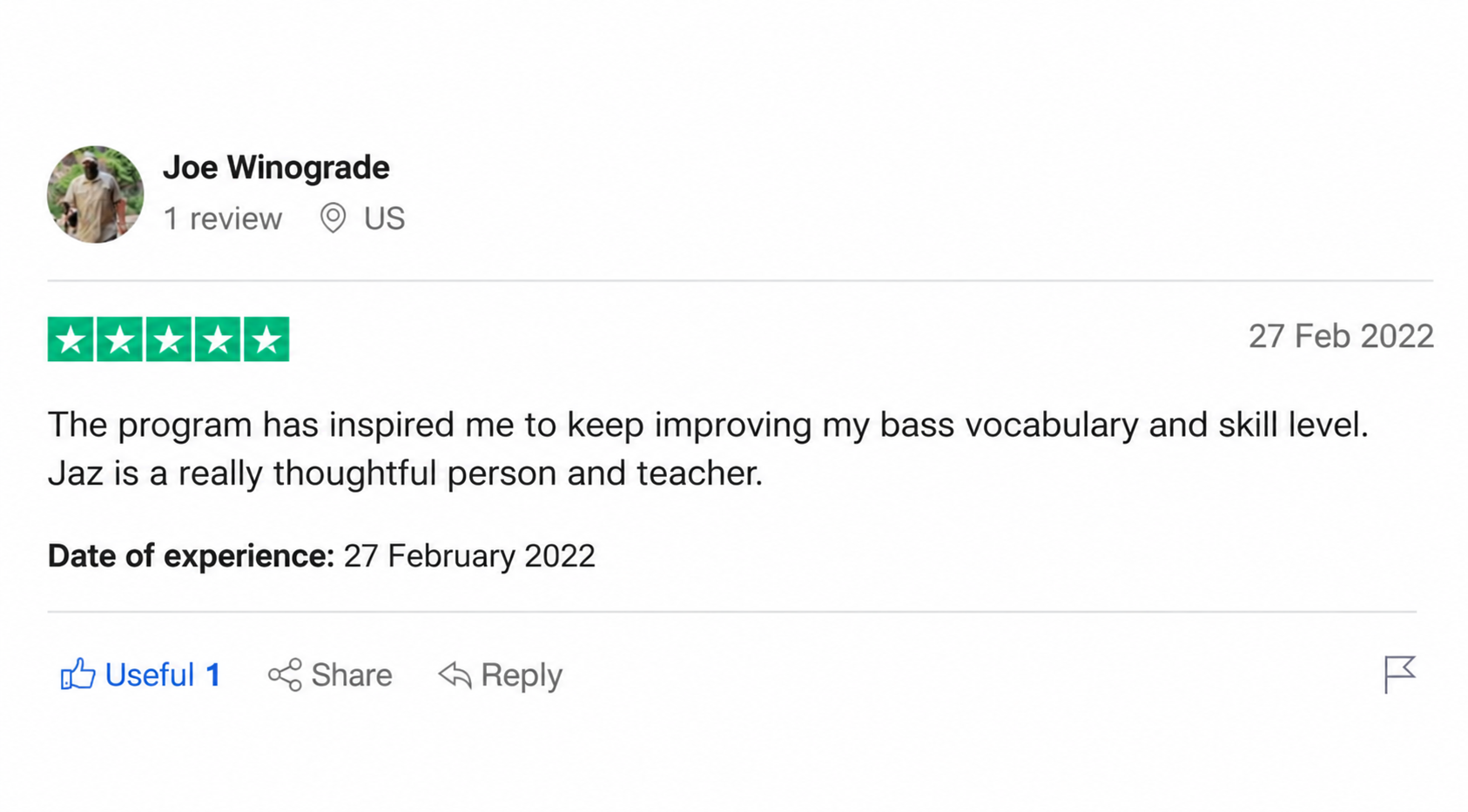
Joe could already play bass, but wanted more freedom to express his own ideas. We developed his musical vocabulary and understanding so he could move beyond familiar patterns and play more creatively with other musicians.
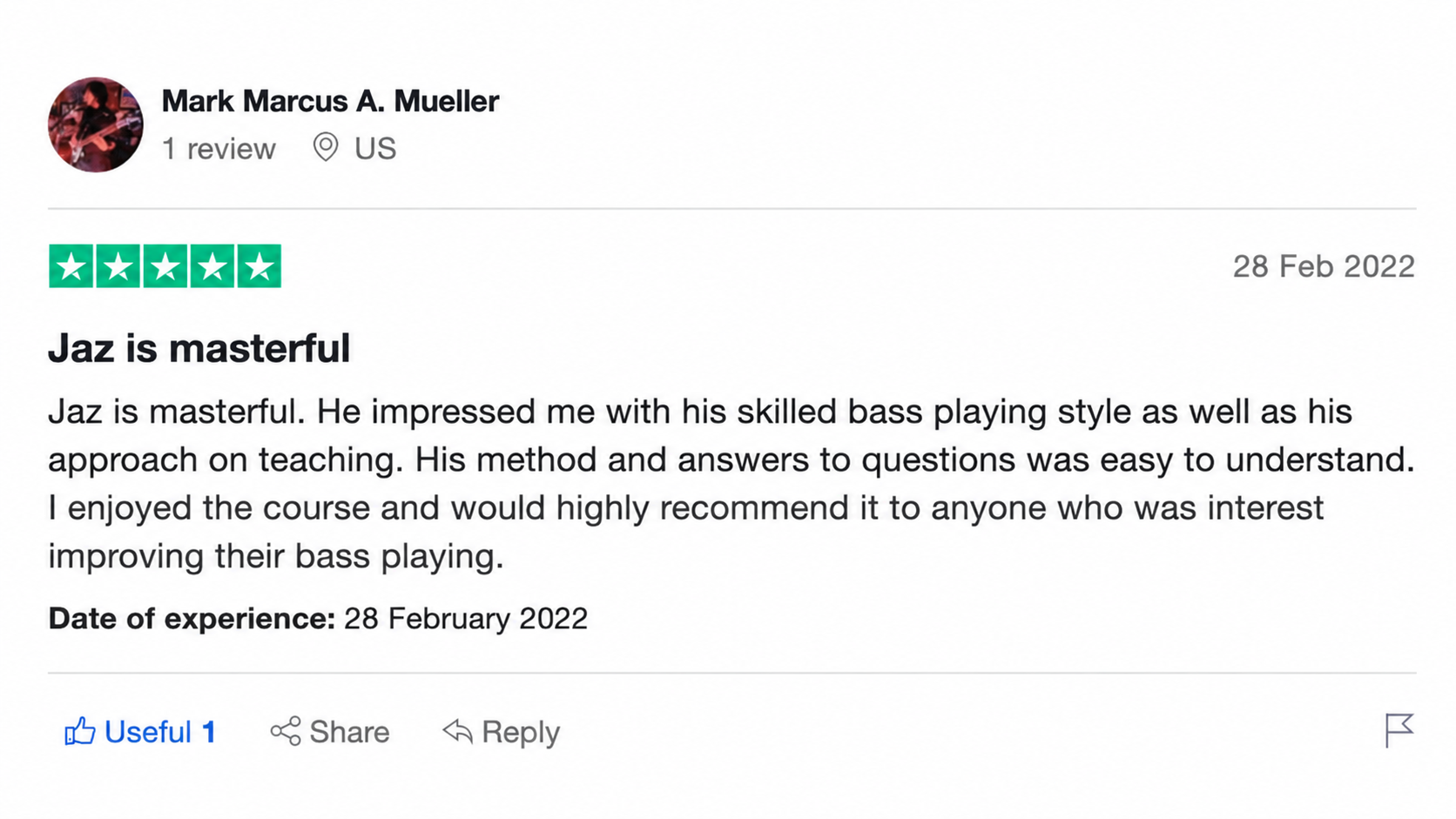
Working together helped Mark build his confidence as a bassist, so he felt more comfortable saying yes to gig opportunities.
Mike was an experienced gigging bassist who’d played by ear for years but didn’t understand the theory behind what he played. I helped him connect the dots and apply theory musically across the fretboard, giving him a clearer understanding of the notes and choices available to him.
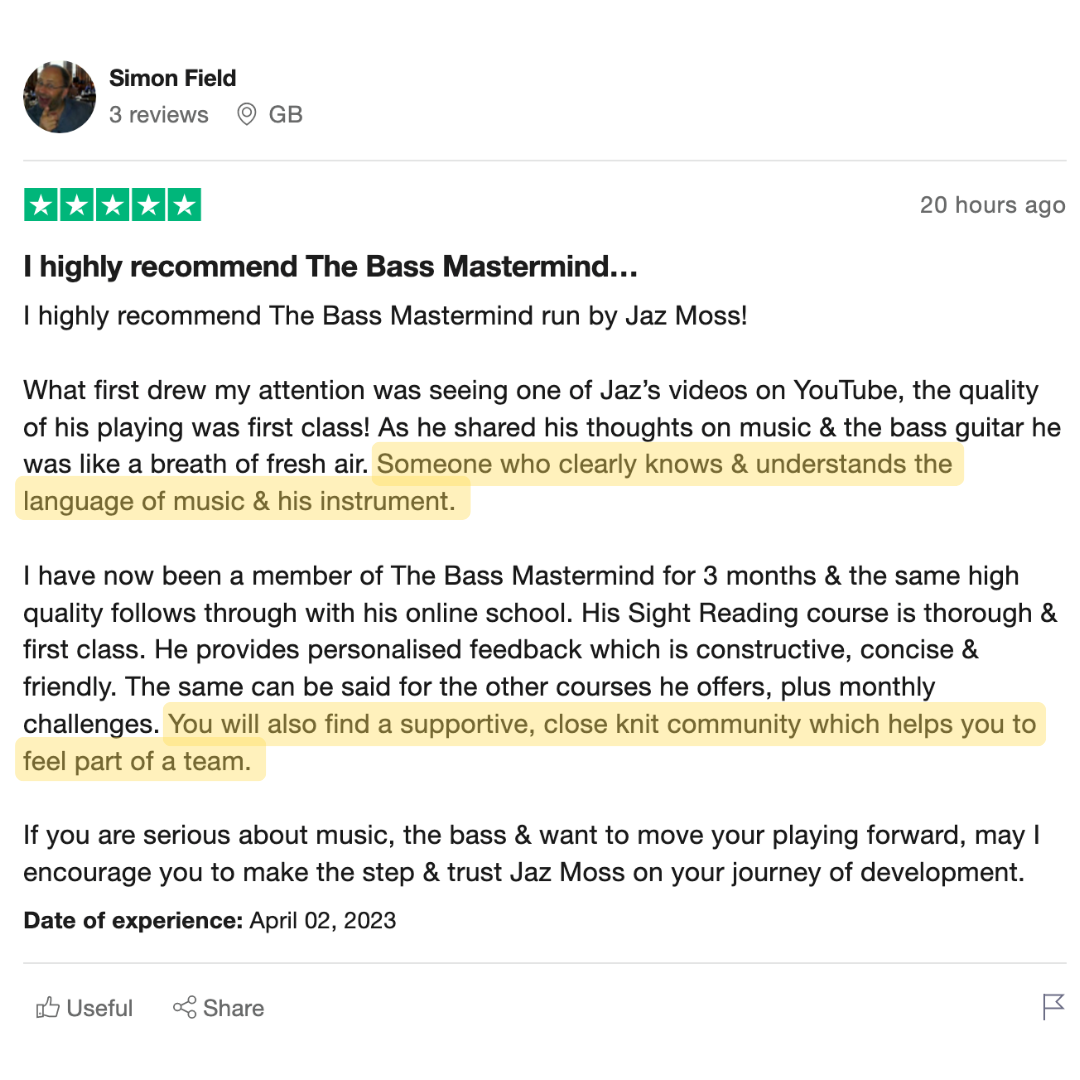
Simon valued the support of a close-knit community where he could ask questions, share his progress and feel part of a team.

I helped Vic improve his technique, eliminate fret buzz and develop his music reading. His playing is now much smoother, and he’s gigging regularly.

Ant learned to sight-read music in 60 days and now gigs around the UK as a semi-professional bassist. He described himself as a much better musician than before he started the course.

Adrienne started as a beginner. Working together helped her develop clean technique and the confidence to play her favourite songs.

Keith wanted to do more than copy songs note for note. I helped him connect scales, keys and chord changes to real bass lines, so he could find his way through a song and play something that worked without needing to memorise the original part.

With my teaching, practice resources and support from the community, Rodrigo significantly improved his sight-reading and confidence on bass.
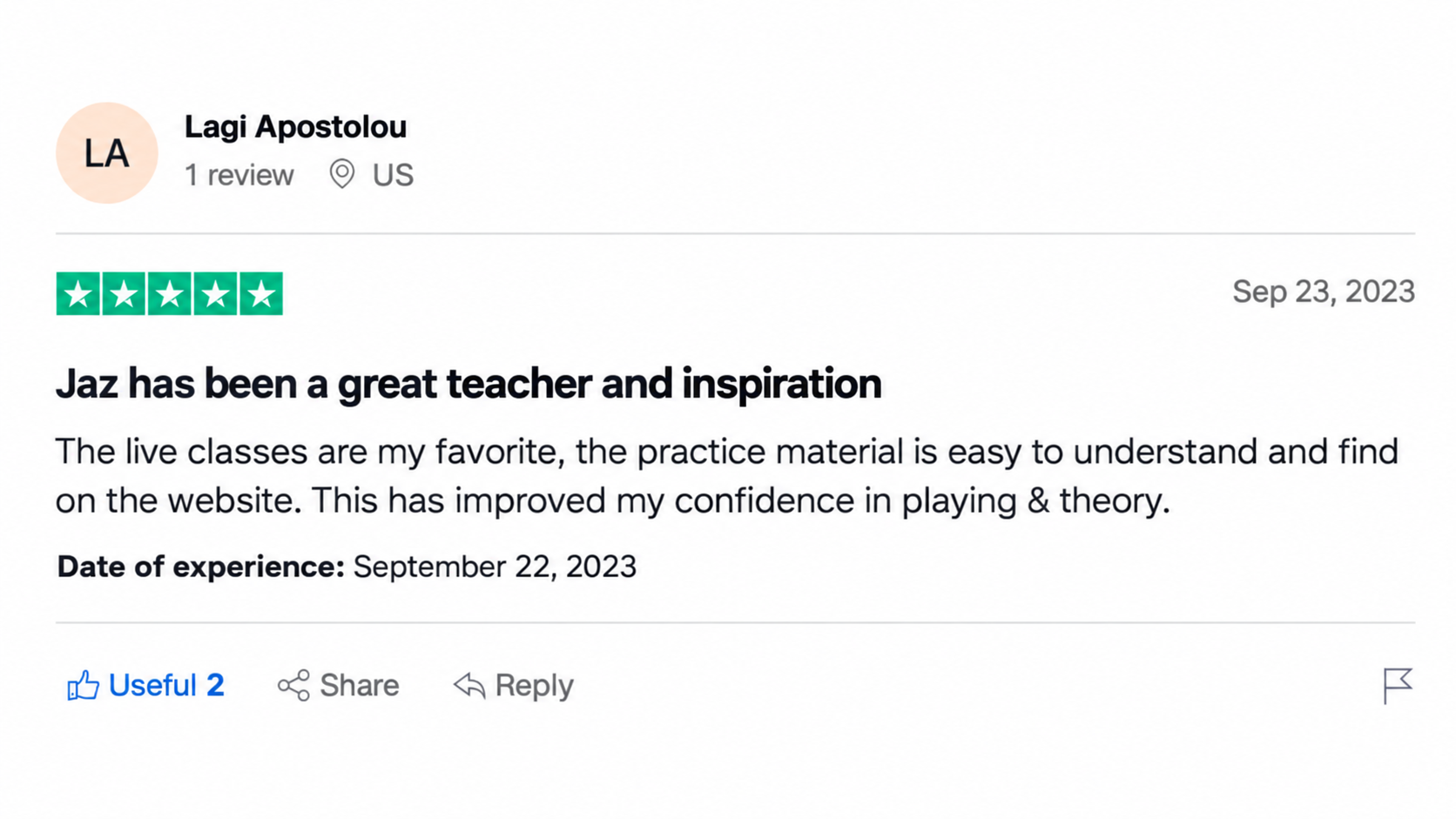
Lagi developed the ability to understand and apply concepts such as triad inversions across songs and reported improved confidence in both his playing and his understanding of theory.
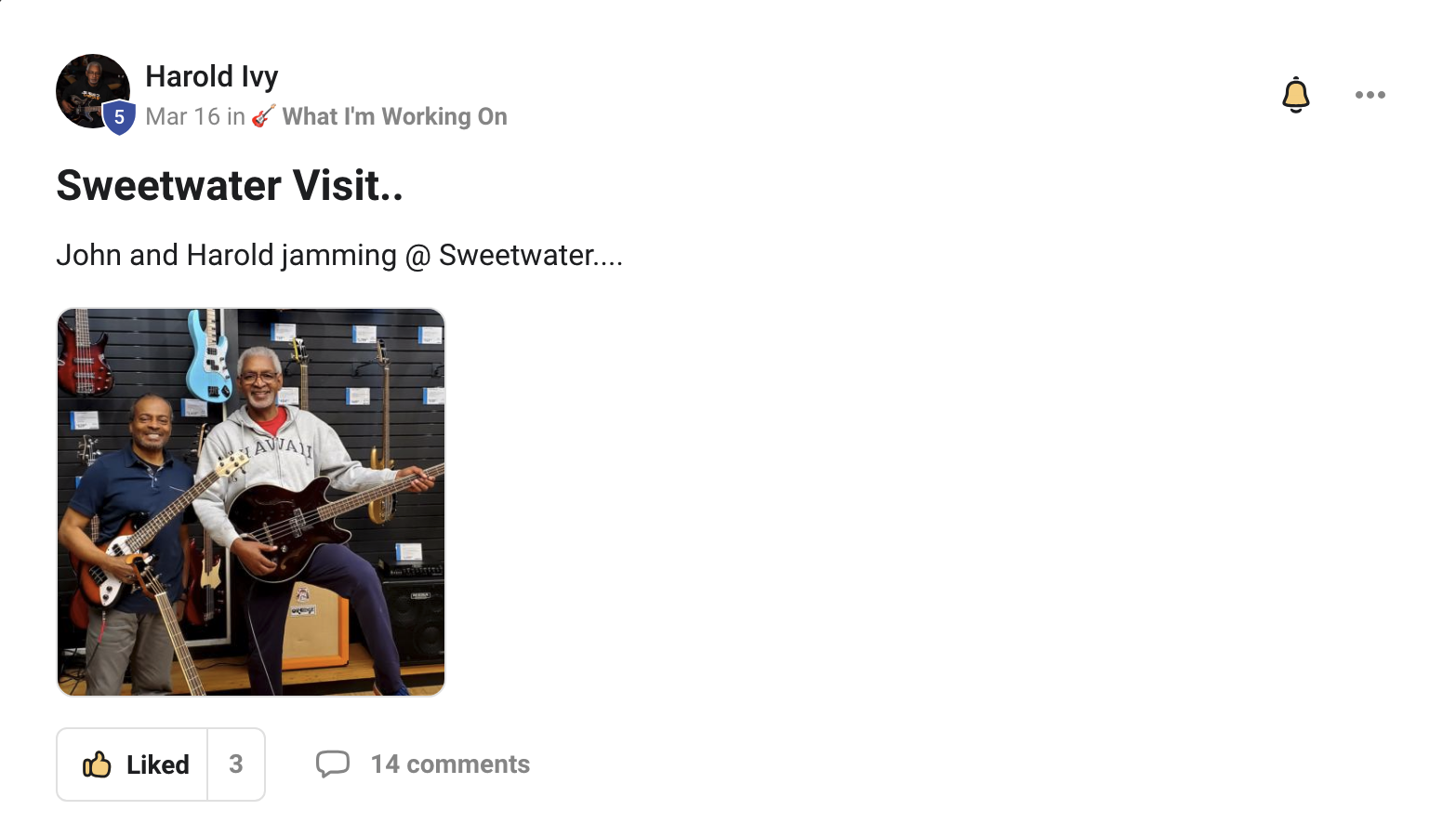
John and Harold met in person at Sweetwater.
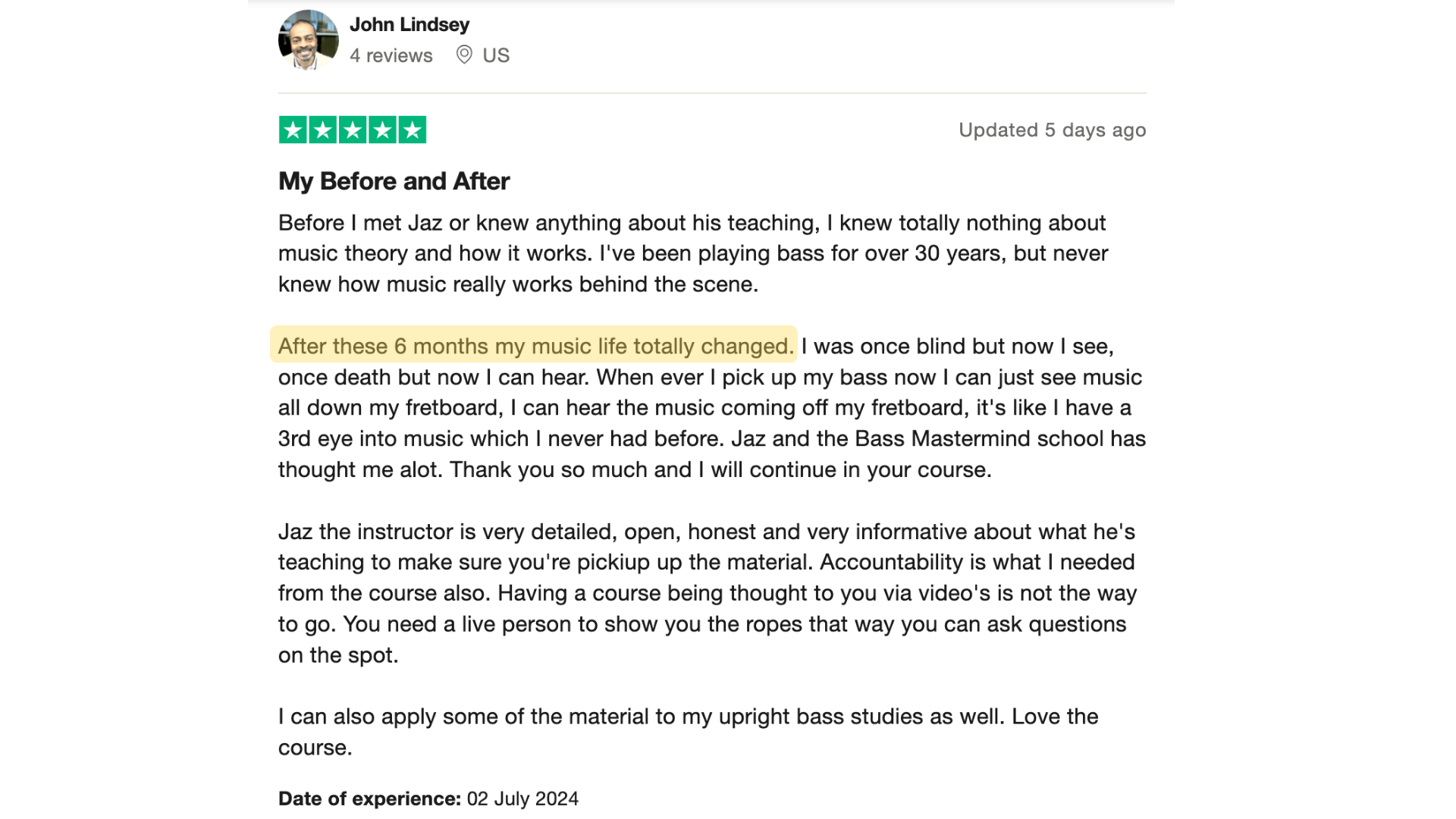
John had been playing bass for 30 years without understanding the theory behind what he played. After six months of studying with me, he could connect that theory to the fretboard and put it to use in his playing.
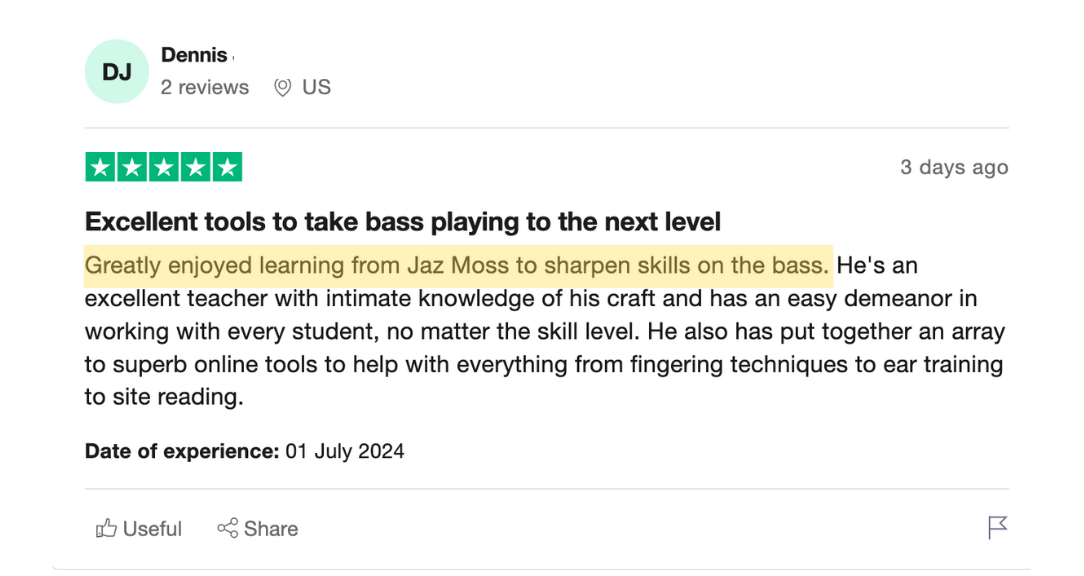
Dennis went from learning songs slowly to improvising and finding his way through unfamiliar songs on the spot.
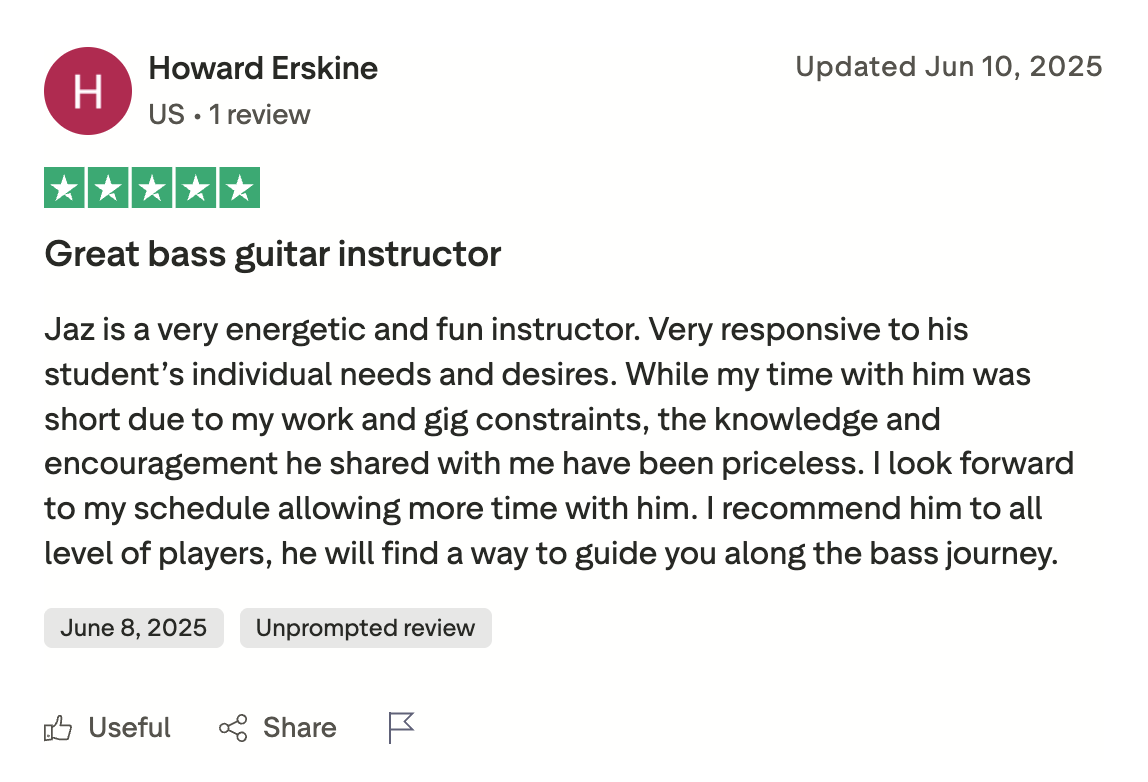
Howard was a busy semi-pro bassist who’d hit an intermediate plateau. Working together helped him play walking bass lines with more freedom and confidence, without overthinking every note or falling back on the same familiar patterns.
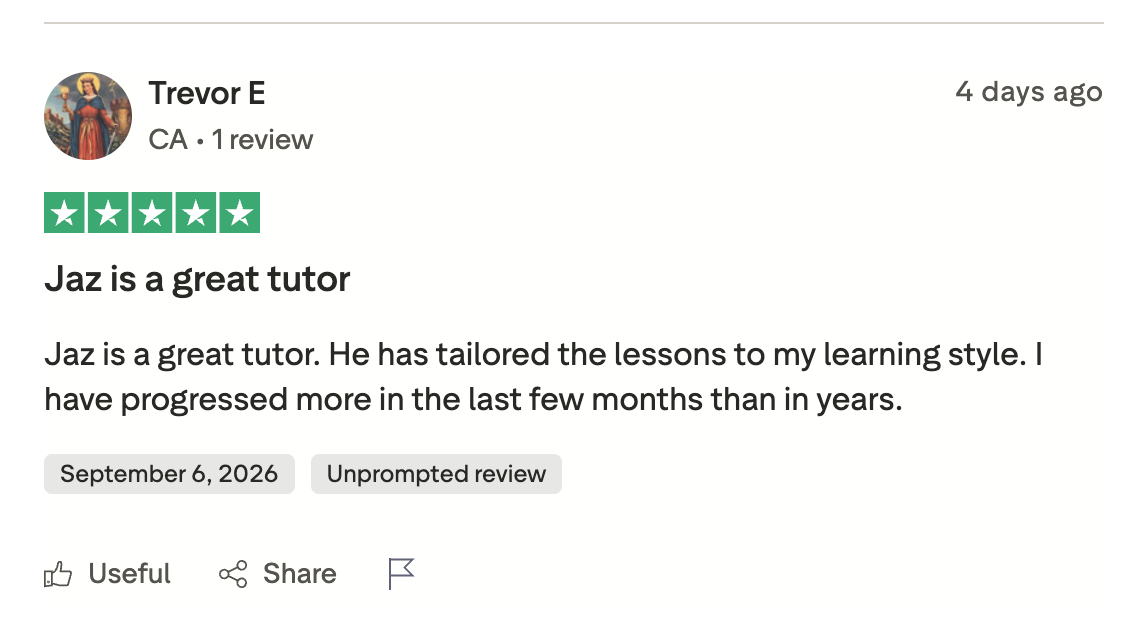
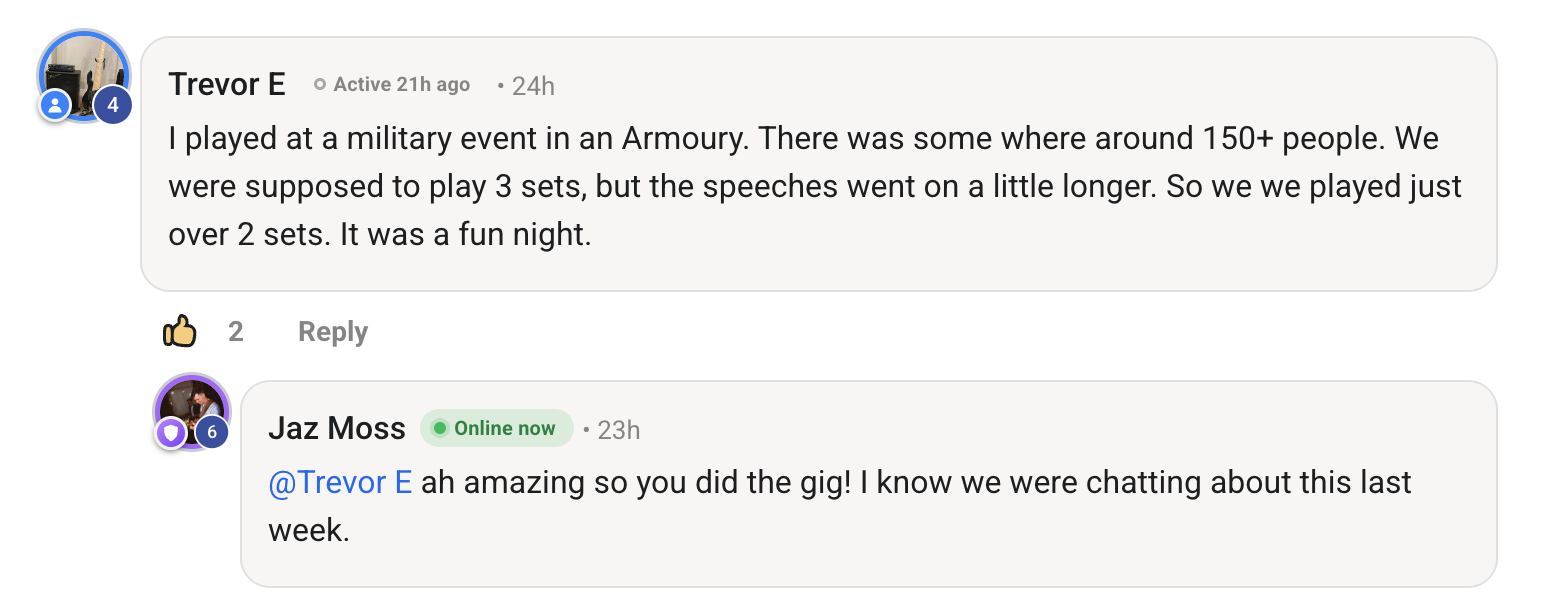
Trevor didn’t feel confident playing with other musicians. By tailoring the lessons to his learning style, I helped him understand how music works and how to learn songs. Three months later, he was performing at a military event for over 150 people.
“I have progressed more in the last few months than in years.”
Howard felt restricted to roots and fifths. I helped him understand how to use other notes and musical ideas to create more interesting bass lines, giving him more choices when he plays.
John and Harold met in person at Sweetwater.
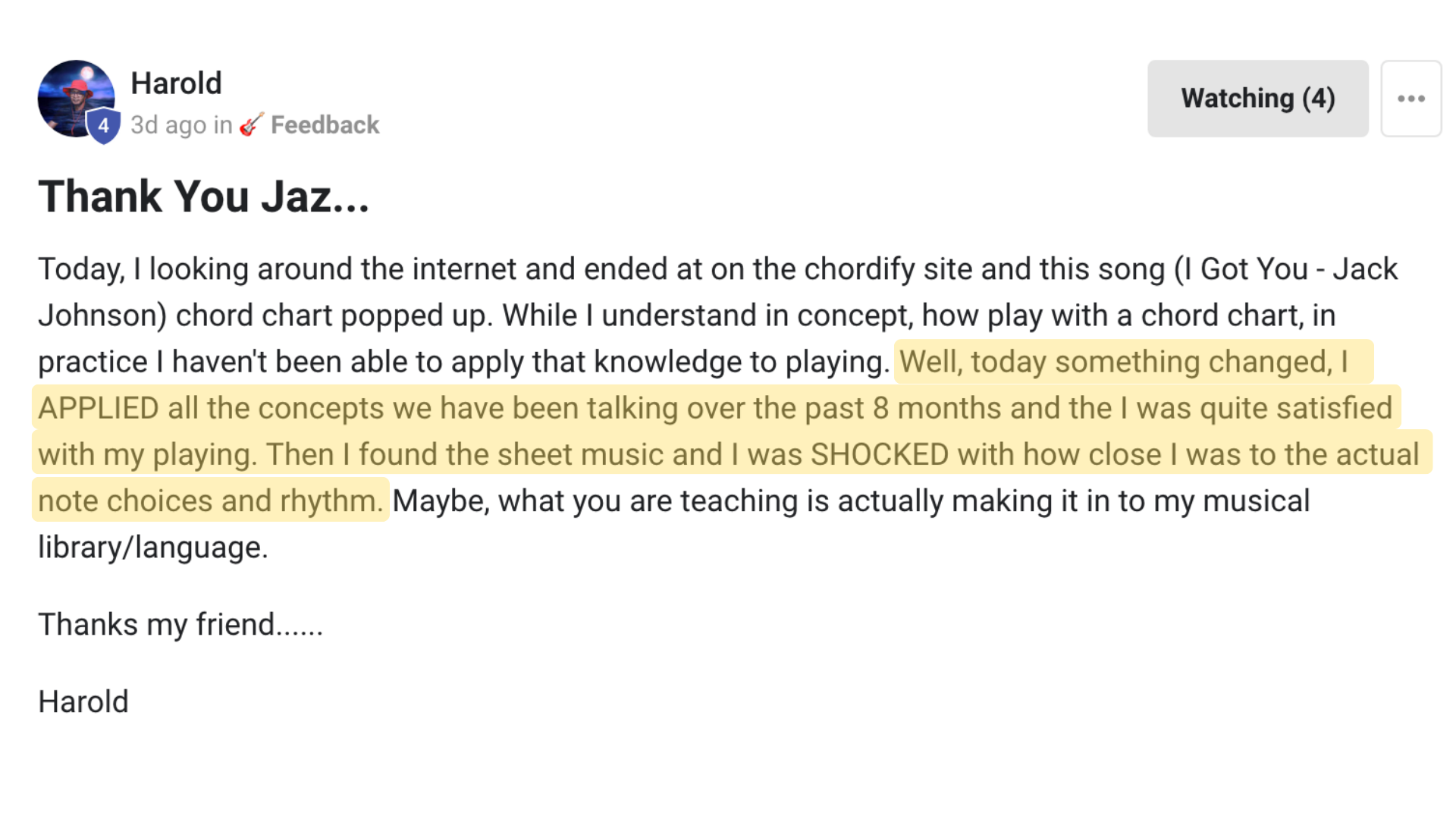
Harold felt stuck in his playing. Working together helped him develop the confidence to sit in with a band and put his musical knowledge into practice.
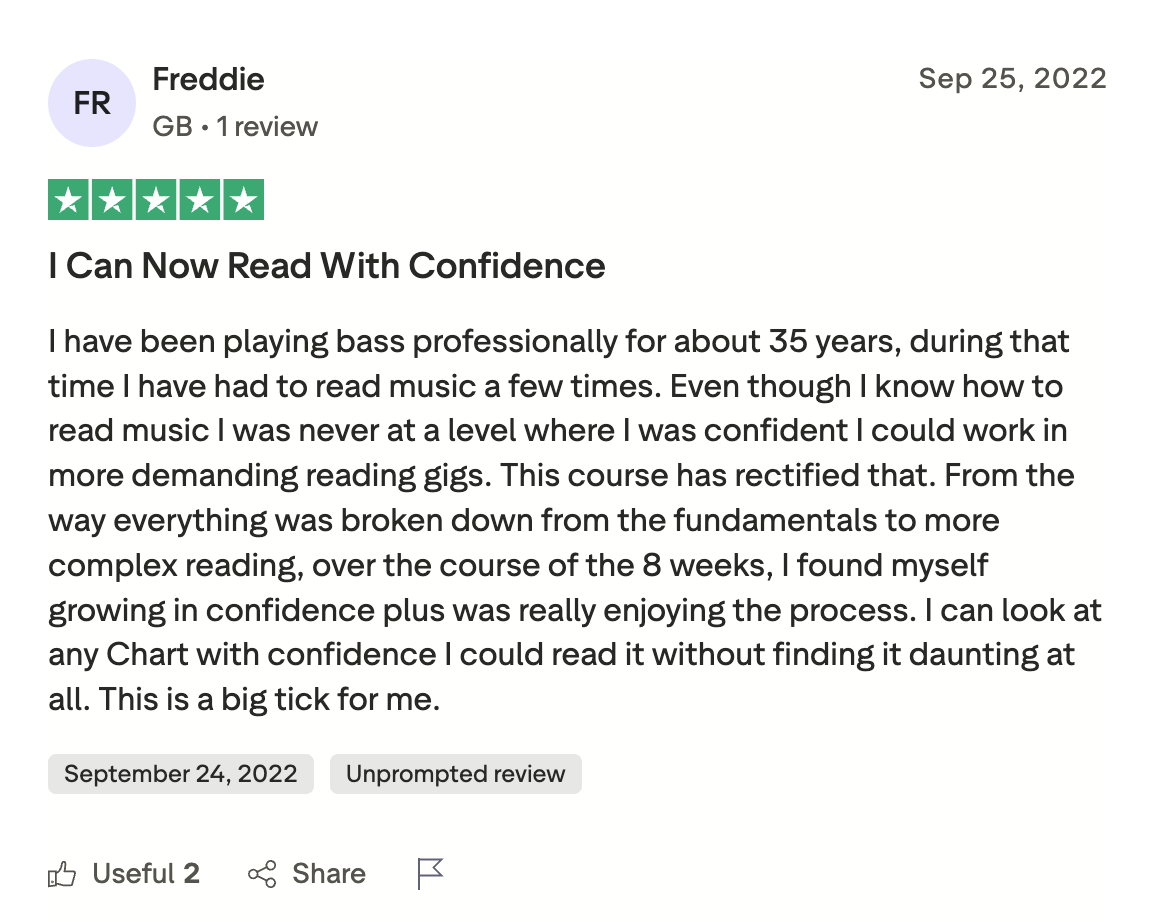
Freddie Thompson, Westlife's bassist and musical director, was already an accomplished professional. I helped him add sight-reading to his skill set in just two and a half months.
We'll spend around 30–45 minutes on a relaxed video call looking at your playing, goals and what's currently holding you back. I'll help identify your biggest roadblocks and map out a personalised roadmap showing what I believe you should focus on next. At the end, you can take that plan away and implement it yourself. If you'd like help implementing it and I believe we're a good fit, you can also ask me about becoming a student.
I'm a professional bassist and educator who's spent the last 15+ years studying, performing and helping bass players develop their musicianship.
It's primarily for intermediate bass players who already know some of the fundamentals but feel like their knowledge exists in disconnected pieces. Maybe you know scales, have heard of modes, understand some theory and can learn songs, but you still struggle to put everything together when you're actually making music. If you freeze when asked to create a bass line, default to the same patterns, feel lost on the fretboard or struggle to understand what other musicians are doing in real time, you're exactly the kind of player this was built for.
Firstly, I genuinely enjoy helping bass players work out what's stopping them progressing. Secondly, it's how I meet potential new students. And finally, I don't work with everyone. The Free Bass Assessment gives both of us a chance to see whether your goals, level and commitment are a good fit for the type of work I do.
Tuition depends on your programme level, duration and mentorship structure. I have everything from free courses inside my Bass Group to premium 1-to-1 coaching. Apply for a Free Bass Assessment to get a personalised recommendation and quote.
You don't need to spend several hours every day practising. For many students, around 4–7 hours of focused practice per week gives us plenty to work with.
No. Courses and learning tools are part of the system, but they're not the main reason it works. The difference is having a clear roadmap, personalised mentorship, regular feedback and accountability so you can actually implement what you're learning.
That's why we have a Free Bass Assessment. During your assessment, if I don't genuinely believe I can help you achieve your goals, I won't recommend that you become a student. Instead, I'll tell you what I believe your best next step should be. No pressure. No obligation. The goal is simply to help you get clear on what you need to do next.
Email [email protected] and we'll see if we can find another option.
I’ll review your application and reach out if you’re selected for a free Bass Assessment.